


- Adjusting agricultural methods in the Bueng Boraphet Wetland to be environmentally friendly.
- Alternate Wetting and Drying (AWD) Rice Cultivation
This is the standard and widely recognized technical term for this rice farming technique.
- Composting Bueng Boraphet Aquatic Weeds for Organic Fertilizer
- This phrase accurately describes the process of turning weeds from the lake into a usable product, which is a key activity in this context.
- Climate Change AdaptationThis is the official and most common term used in reports and academic papers to describe the process of adjusting to actual or expected climate changes.
Adjusting agricultural methods in the Bueng Boraphet Wetland to be environmentally friendly
share :


Introduction
Bueng Boraphet is Thailand's largest freshwater lake, designated as an internationally significant wetland. The lake's geography is a low-lying, biodiverse area with a variety of aquatic plants, animals, and wildlife, especially both resident and migratory birds.
The surrounding communities benefit from this wetland for fishing and agriculture, with rice cultivation being the most prominent activity, covering 79,858 rai. This is primarily off-season rice farming, which requires a significant amount of water. This practice has led to a rapid decline in the lake's water levels, negatively impacting the ecosystem and causing conflict among communities over water allocation for rice cultivation. Furthermore, off-season rice farming contributes to greenhouse gas emissions.
When aquatic plants are submerged during the flood season, they decompose through an anaerobic process, releasing greenhouse gases into the atmosphere. This highlights that wetland areas generate greenhouse gases primarily through two activities: off-season rice farming and the flooding of weeds during the rainy season.
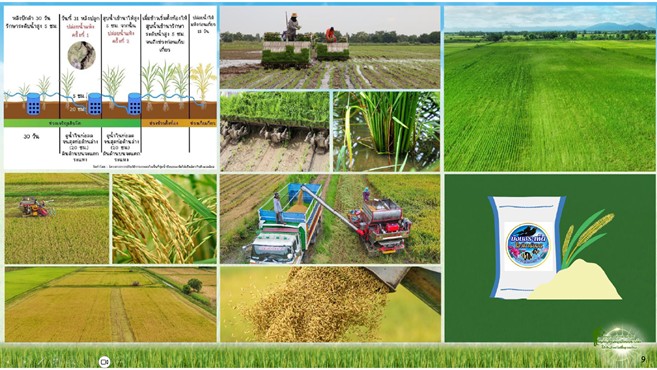
Therefore, to align with efforts to mitigate climate change, there is a concept to reduce greenhouse gas emissions by shifting from off-season rice farming to an alternate wetting and drying method. This technique uses less water and releases significantly less methane than traditional off-season farming. In addition, there is a push to form community enterprises and promote the use of aquatic weeds from Bueng Boraphet to produce fertilizer. This fertilizer can generate income and is environmentally friendly for the community of Phra Non subdistrict.
Groups of fertilizer producers are being encouraged to form, with the final model depending on the local context. All these initiatives align with COP28 policies and the Bueng Boraphet sandbox, which aims to achieve Net Zero by 2030.
Objectives
1) To establish a learning process for local communities to adopt environmentally friendly agricultural practices in the Bueng Boraphet wetland area.
2) To create a learning center for environmentally friendly livelihoods within the Bueng Boraphet wetland.
3) To increase local income by developing products from aquatic plants and promoting environmentally friendly agriculture.
Project Status
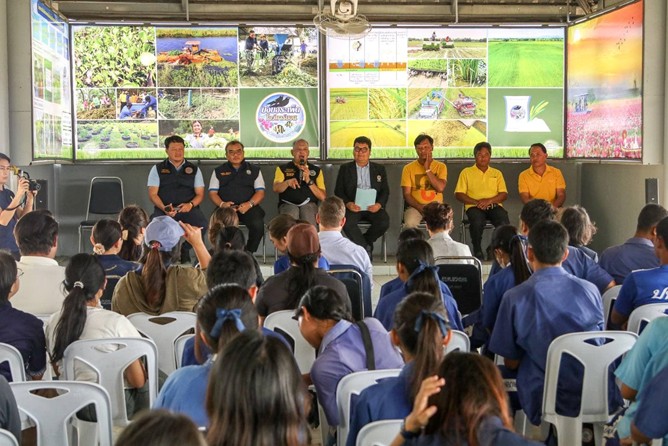
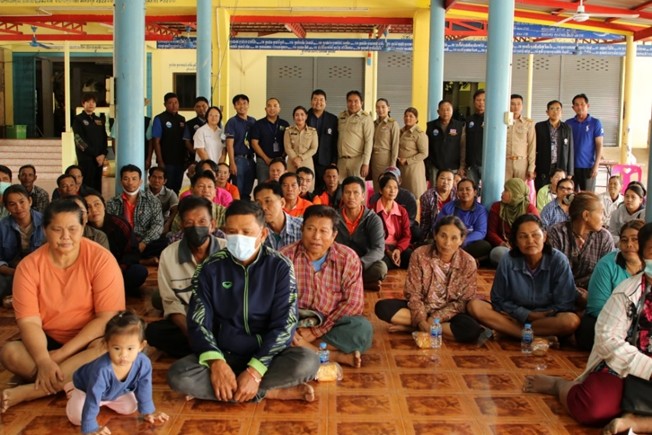
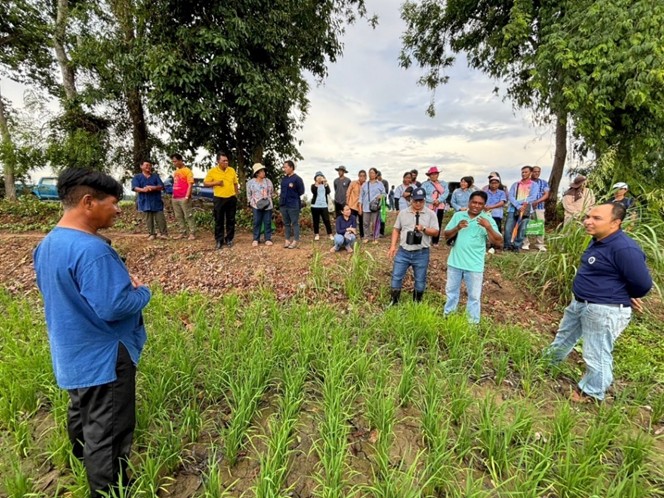
The project is currently in its initial phase. This includes providing knowledge to residents in Wang Makorn and Phra Non subdistricts. A needs assessment is being conducted to understand the requirements for implementing new rice cultivation methods and managing aquatic weeds in Bueng Boraphet.
Additionally, study visits have been arranged to inspire participants, and a 100-rai trial plot for the alternate wetting and drying (AWD) rice cultivation method has been established within the Bueng Boraphet area.
Project Outputs
1) Training covering Green Technology, Climate Change, SDGs, BCG, and agricultural adaptation in wetland areas.
2) A model plot for alternate wetting and drying (AWD) rice cultivation and the establishment of a community enterprise group for environmentally friendly agriculture in Wang Makorn Subdistrict, Tha Tako District, Nakhon Sawan Province.
3) A model site for producing fertilizer from Bueng Boraphet aquatic plants and the establishment of a fertilizer production group in Phra Non Subdistrict, Mueang District, Nakhon Sawan Province.
4) Results from the project's Social Return on Investment (SROI) calculation.
5) A policy guidance manual for local agencies.
Expected Outcomes
1) Local residents will have increased knowledge, understanding, and a new mindset toward environmentally friendly livelihoods in the Bueng Boraphet wetland.
2) The model plots for alternate wetting and drying (AWD) rice cultivation and fertilizer production from aquatic plants will serve as learning centers for other communities, with the potential for future expansion to nearby areas and other wetlands.
3) Increased income for local residents from their participation in project activities.
4) The policy guidance manual will serve as a model for implementation in other wetlands with a similar context to Bueng Boraphet.
5) The Nakhon Sawan Provincial Treasury Office will be able to incorporate environmentally friendly agricultural guidelines into future lease agreements for residents in the Bueng Boraphet area.
Results of Implementation
1) Local communities have gained knowledge from activities that help reduce greenhouse gas emissions, including composting aquatic weeds for fertilizer in Phra Non subdistrict and conducting alternate wetting and drying (AWD) rice cultivation on a 100-rai plot in Wang Makorn and Thap Krit subdistricts.
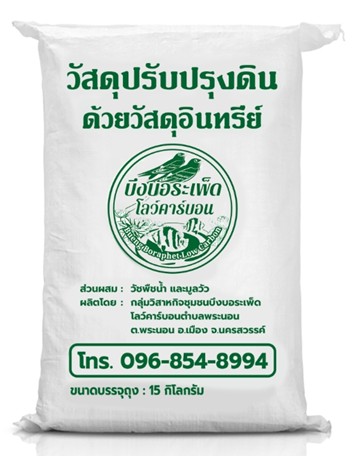
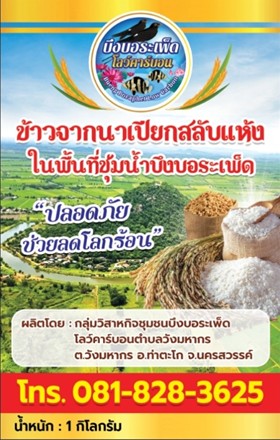
2) Community enterprise groups have been established in two subdistricts: the "Bueng Boraphet Low Carbon" Community Enterprise Group in Wang Makorn subdistrict and another in Phra Non subdistrict. This initiative has also led to the creation of the "Bueng Boraphet Low Carbon" brand. (Figure 1)
3) Two prototype products have been developed: soil conditioner made from aquatic weeds and rice harvested from the AWD plots.
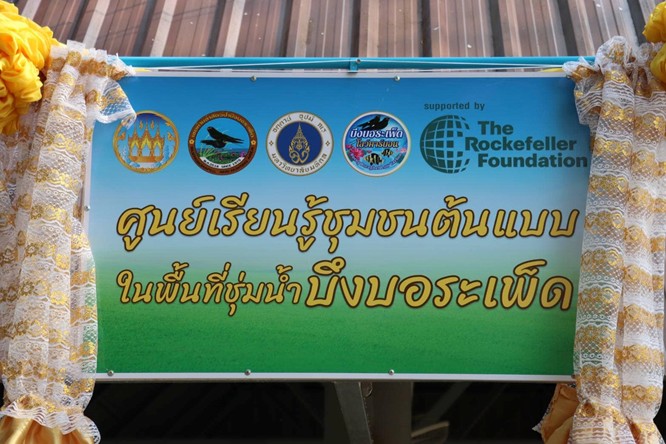
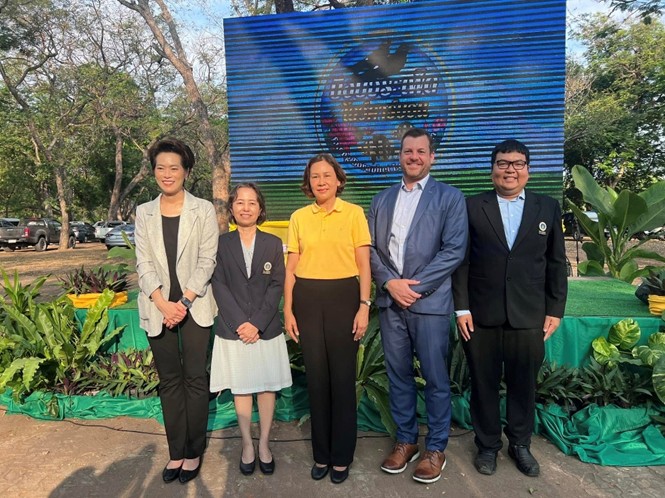
4) A model community learning center has been opened in the Bueng Boraphet Non-Hunting Area, serving as a valuable resource for local residents and other interested parties.
Project Extensions
1) Nakhon Sawan Province has prioritized the promotion of alternate wetting and drying (AWD) rice cultivation, as evidenced by Provincial Order No. 03367/2567. This order established a committee to drive the development of this agricultural practice in the Bueng Boraphet model area and other parts of the province to encourage its widespread adoption.
2) The Bueng Boraphet Non-Hunting Area has secured funding from the Environmental Fund, administered by the Office of Natural Resources and Environmental Policy and Planning (ONEP). This funding supports the promotion of AWD rice cultivation by financing land adjustments and aiming for an expansion of 800 rai annually over a three-year period.
3) The Bueng Boraphet network has established connections with the private sector to drive the adaptation of agricultural land for AWD cultivation. The Siam Cement Group (SCG) and Siam Kubota Corporation have provided support by linking the network with policymakers and supplying machinery for land-leveling trials in the community's pilot plots.
4) Connections have been established with Kasetsart University and the National Center for Genetic Engineering and Biotechnology (BIOTEC). They will provide expertise and high-quality rice seeds to the Bueng Boraphet network for rice variety improvement within the wetland area.
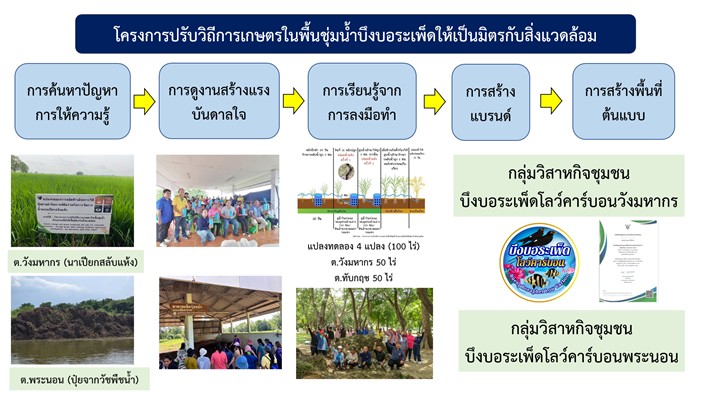
Figure 1 Project Implementation Steps
Links
-
ม.มหิดล นครสวรรค์ ร่วมเครือข่ายชุมชน ชู 3 กลยุทธ์พลิกฟื้นนาข้าวยั่งยืนhttps://www.nstda.or.th/sci2pub/3-strategies-to-revive-sustainable-rice-fields➞
-
ม.มหิดล นครสวรรค์ ร่วมเครือข่ายชุมชน ชู 3 กลยุทธ์พลิกฟื้นนาข้าวยั่งยืนhttps://op.mahidol.ac.th/ga/wp-content/uploads/twitter/news-2024-5-2-1.pdf➞
-
รายการเคลียร์คัด ชัดเจน:การขับเคลื่อนปรับเปลี่ยนอาชีพเกษตรกรเป็นมิตรกับสิ่งแวดล้อมพื้นที่ชุ่มน้ำhttps://www.youtube.com/watch?v=aVkXHnNr-38➞
-
บึงบอระเพ็ด ช่วยลดโลกร้อนด้วยการเกษตรที่เป็นมิตรกับสิ่งแวดล้อมสู่การพัฒนาที่ยั่งยืนhttps://op.mahidol.ac.th/ga/bueng-boraphet/➞
-
VDO: โครงการการปรับวิถีการเกษตรในพื้นชุ่มน้ำบึงบอระเพ็ดให้เป็นมิตรกับสิ่งแวดล้อมhttps://youtu.be/Ow3Jrap6ePI➞
-
VDO: Promoting Eco-Friendly Agricultural Practices in the Bueng Boraphet Wetlands.https://youtu.be/lcbHgujks9Y➞
-
VDO: การเปิดศูนย์เรียนรู้ชุมชนต้นแบบบึงบอระเพ็ดโลว์คาร์บอนhttps://youtu.be/VJzAFp8ln-M➞
Partners/Stakeholders
- The Rockefeller Foundation
- Division of International Relations, Mahidol University
- Nakhonsawan Governance
- Bueng Boraphet Non-hunting Area.
- Boraphet Marsh dredging and Weed removal Unit
- Nakhon Sawan Provincial Fisheries Office
- Nakhon Sawan Provincial Agricultural and Cooperatives Office
- Nakhon Sawan Provincial Treasury Office
- Nakhon Sawan Water Allocation Division 3 (Department of Water Resources)
- Phra Non Subdistrict Administrative Organization
- Wang Makorn Subdistrict Administrative Organization
- Bueng Boraphet Water Users' Organizations Network
- People living around Bueng Boraphet
ผู้ดำเนินการหลัก
Napon Anuttarunggoon, Ph.D
ส่วนงานหลัก
ผู้ดำเนินการร่วม
Piyathep Avakul, Ph.D Pornpirat Kantatasiri, Ph.D Puntaree Taeprayoon, Ph.D Mr. Tanakorn Junmakasit Ms. Wimonrat Atthaboon
ส่วนงานร่วม

This website values privacy. To give you a good experience on our website If you use this website
Without any adjustments, you are agreeing to our use of cookies and our privacy notice.
More details